Buy branchenbuch.co.at ?
We are moving the project
branchenbuch.co.at .
Are you interested in purchasing the domain
branchenbuch.co.at ?
domain@kv-gmbh.de · 0541-91531010
Buy branchenbuch.co.at ?
Are dipoles always polar?
No, dipoles are not always polar. A dipole is formed when there is a separation of positive and negative charges within a molecule. If the molecule is symmetrical and the charges are evenly distributed, the dipole moments cancel each other out, resulting in a nonpolar molecule. Only asymmetrical molecules with an uneven distribution of charges will have a net dipole moment, making them polar. **
Are all polar bonds dipoles?
Yes, all polar bonds are dipoles. A polar bond is a type of covalent bond where there is an unequal sharing of electrons between two atoms, resulting in a partial positive and partial negative charge on the atoms involved. This charge separation creates a dipole moment, making the bond a dipole. **


Similar search terms for Dipoles
Top-Angebote
Products related to Dipoles:
-
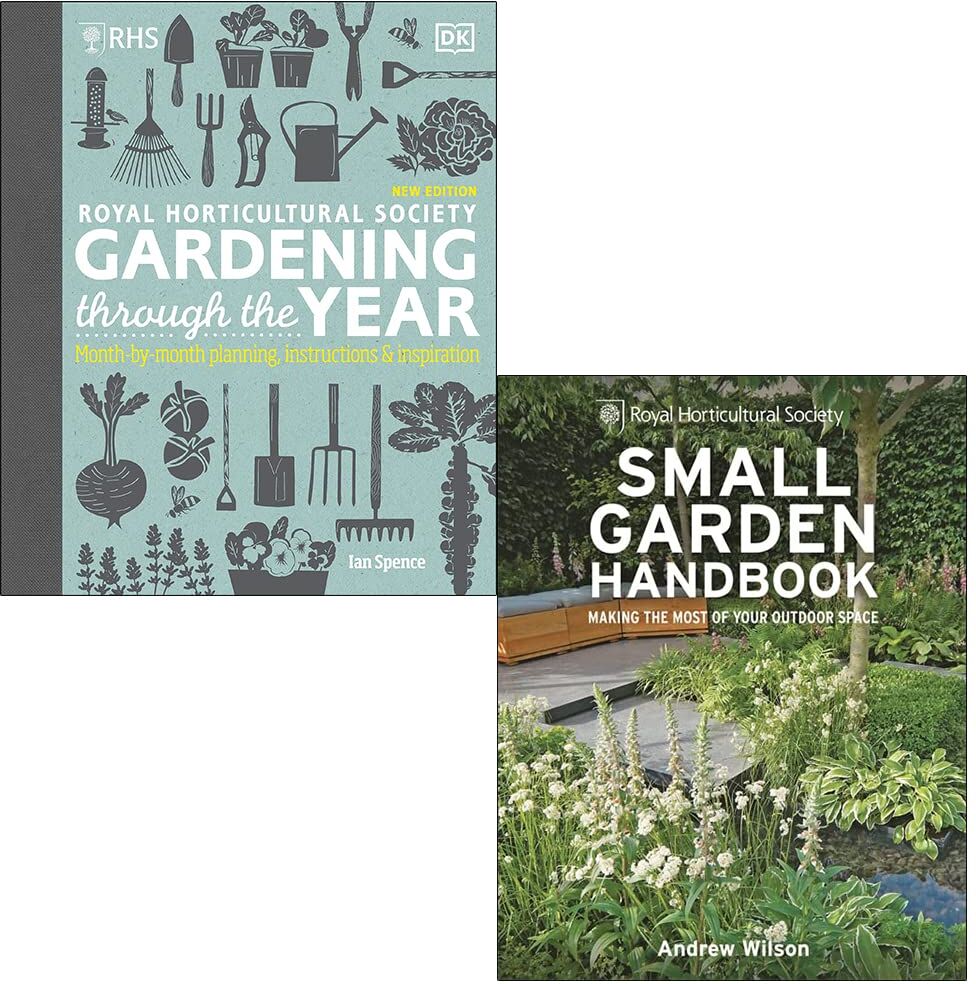
DK RHS Gardening Through the Year & Small Garden Handbook 2 Book Set – Seasonal Gardening & Design GuideRHS Gardening Through the Year By Ian Spence & RHS Small Garden Handbook By Andrew Wilson 2 Books Collection Set: RHS Gardening Through the Year: Find out when the best time is for pruning rose bushes, when your potatoes will be ready to harvest, how to keep your lawn green and well-fed, and learn how to plan ahead with this comprehensive gardening book. Keep on top of garden tasks with month-by-month chapters, "Last Chance" reminders, "Get Ahead" tips, and handy to-do lists. This RHS book will make gardening easier by providing helpful guidelines and realistic advice, so you can plan out your time efficiently and effectively. Packed with beautiful photo galleries that showcase each month's "Star Plant", you'll be inspired to have your own garden blooming throughout the year! Explore more than 350 different varieties in the A-Z illustrated plant directory. RHS Small Garden Handbook: RHS Small Garden Handbook provides an all-in-one guide for small space gardeners and draws on the experience in growing, planting, landscaping and design for which the RHS is world famous. It begins by explaining how to assess your plot so that you are aware of the soil, orientation, microclimate, existing materials and proportions that you have to work with, before revealing the principles of good design. Showing how your decisions on layout, colour and texture will affect the finished design and what tricks can be played to create a greater sense of space - with everything from expert design advice on boundaries, hedges and fences to clever ideas for containers and storage - every gardener will gain confidence in creating a garden to enjoy no matter how big the plot.19,95 £*Shipping: 2,99 £Secure redirect to the provider
-
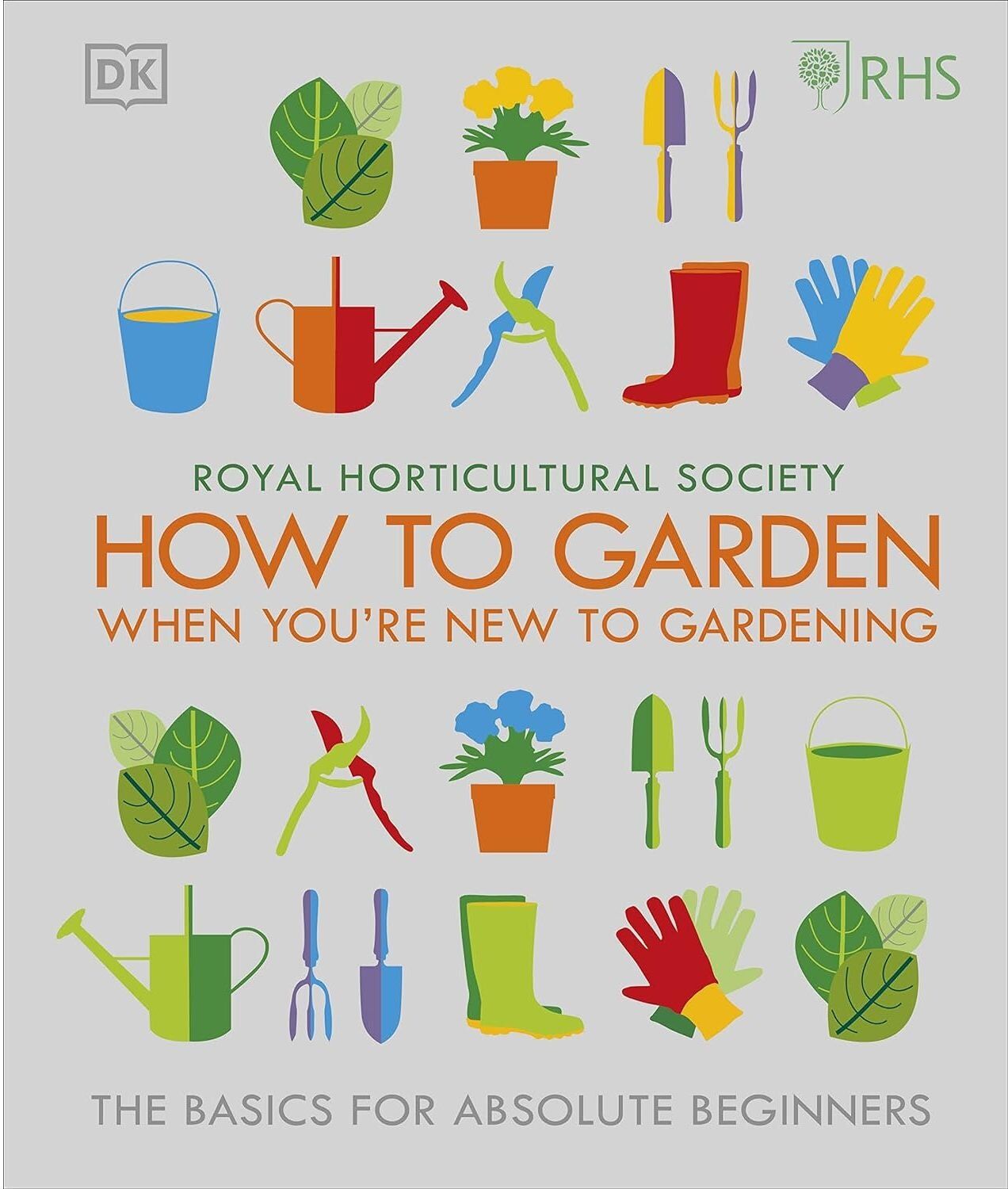
DK How to Garden When You’re New to Gardening by Royal Horticultural Society – Beginner’s Guide to Gardening BasicsIf the desire to start a garden has been planted in your heart, then this essential guide is a wonderful companion to accompany you on your new adventure!If you're not sure of the first steps to take, this handbook takes the anxiety out of plotting and planting and equips you with all the know-how and confidence you need to get digging into your garden.Creating a garden that you can enjoy and keep looking beautiful all year round is easier than you think!With the expertise of the Royal Horticultural Society, you'll find simple step-by-step instructions, with clear images to help you create your dream garden, no matter the size and scale.Get to know your garden and choose plants that will grow well in particular soil types and conditions year after year. From growing root crop to cutting back ivy, this book gives you lots of simple garden ideas and projects that you can do yourself.Even if you've never sowed a seed or pulled a weed, RHS How to Garden When You're New To Gardening contains everything you need to kickstart your new outdoor hobby! This refreshingly accessible book is perfect for the novice gardener who wants to make the most of whatever garden they have.Your Guide to Creating the Garden of Your DreamsDo you want to create a garden you can show off with pride? Would you like to grow your own food? This book will get you started quickly! By following the simple steps and projects outlined in this book, you will reap instant rewards and long-term successes so that you can enjoy your garden in all seasons.Inside the pages of this comprehensive gardening book, you'll discover:- Clear definitions and descriptions of the different types of plants.- Tips on choosing the type of garden you want.- Easy-to-follow instructions for choosing the right plants for your soil.- Simple step-by-step instructions to producing your first crop.- Practical gardening advice on planting, growing, and caring for different plants.7,99 £*Shipping: 2,99 £Secure redirect to the provider
-
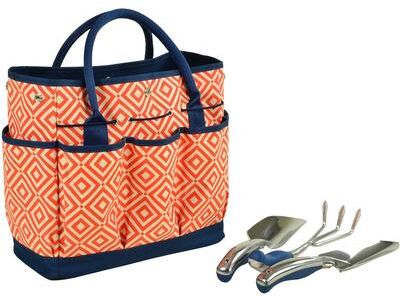
Picnic at Ascot Diamond Collection Gardening Tote with ToolsCasual Style defines this durable multi-pocket gardening tote. Set includes three top quality, heavy gauge stainless tools with comfort grip handles. Roomy interior is great for transporting supplies and side pockets have room for a beverage and...59,99 $*Shipping: 0,00 $Secure redirect to the provider

-
Do ionic compounds form dipoles?
Ionic compounds do not form dipoles because they consist of ions held together by electrostatic forces of attraction. In an ionic compound, one atom donates electrons to another atom, resulting in the formation of positively and negatively charged ions. These ions are arranged in a crystal lattice structure, with no separation of charges within individual molecules to create dipoles. **
-
What are dipoles in chemistry?
In chemistry, a dipole refers to a molecule that has a separation of positive and negative charges. This occurs when there is an unequal distribution of electrons within the molecule, causing one end to be slightly positive and the other end to be slightly negative. This separation of charges creates a dipole moment, which can result in the molecule having polar characteristics. Dipoles are important in understanding the behavior of molecules in various chemical reactions and interactions. **
-
How can one recognize dipoles?
Dipoles can be recognized by looking at the distribution of charge within a molecule. A molecule with a significant difference in electronegativity between its atoms is likely to have a dipole moment. Additionally, if a molecule has a symmetrical shape, it is less likely to be a dipole, while asymmetrical shapes are more likely to have a dipole moment. Experimentally, dipoles can be identified using techniques such as infrared spectroscopy or measuring the molecule's behavior in an electric field. **
-
Are they dipoles or not?
It depends on the specific molecules in question. If a molecule has a significant difference in electronegativity between its atoms and a non-symmetrical shape, it is likely to be a dipole. However, if a molecule has a symmetrical shape or the electronegativity difference between its atoms is negligible, it is likely to be non-polar and not a dipole. It is important to consider both the shape and the electronegativity of the atoms in a molecule to determine if it is a dipole or not. **
Are all angular molecules dipoles?
No, not all angular molecules are dipoles. A molecule is a dipole if it has a separation of positive and negative charges, which occurs when the molecule is asymmetrical. Angular molecules, also known as bent molecules, can be dipoles if they have an uneven distribution of electrons, resulting in a net dipole moment. However, some angular molecules, such as carbon dioxide (CO2), are symmetrical and do not have a net dipole moment. **
Is quick help needed with dipoles?
Quick help with dipoles may be needed depending on the complexity of the problem or the level of understanding of the individual seeking help. Dipoles can be challenging to understand for some, so having quick assistance can be beneficial in clarifying concepts or solving problems efficiently. However, with proper resources and guidance, individuals can also learn and work through dipoles at their own pace. **
Top-Angebote
Products related to Dipoles:
-
Fusion Finds Professional Handheld Mirror Large Salon Mirror For Barbers, Hairdressers & Home Grooming Professional Handheld Mirror Large Salon Mirror For Barbers, Hairdressers & Home GroomingExperience every detail with confidence using a Handheld Mirror designed for professionalquality viewing at home or in the salon. Whether you're checking the back of a fresh haircut, styling your hair, or perfecting your look, this practical mirror...37,97 $*Shipping: 0,00 $Secure redirect to the provider
-
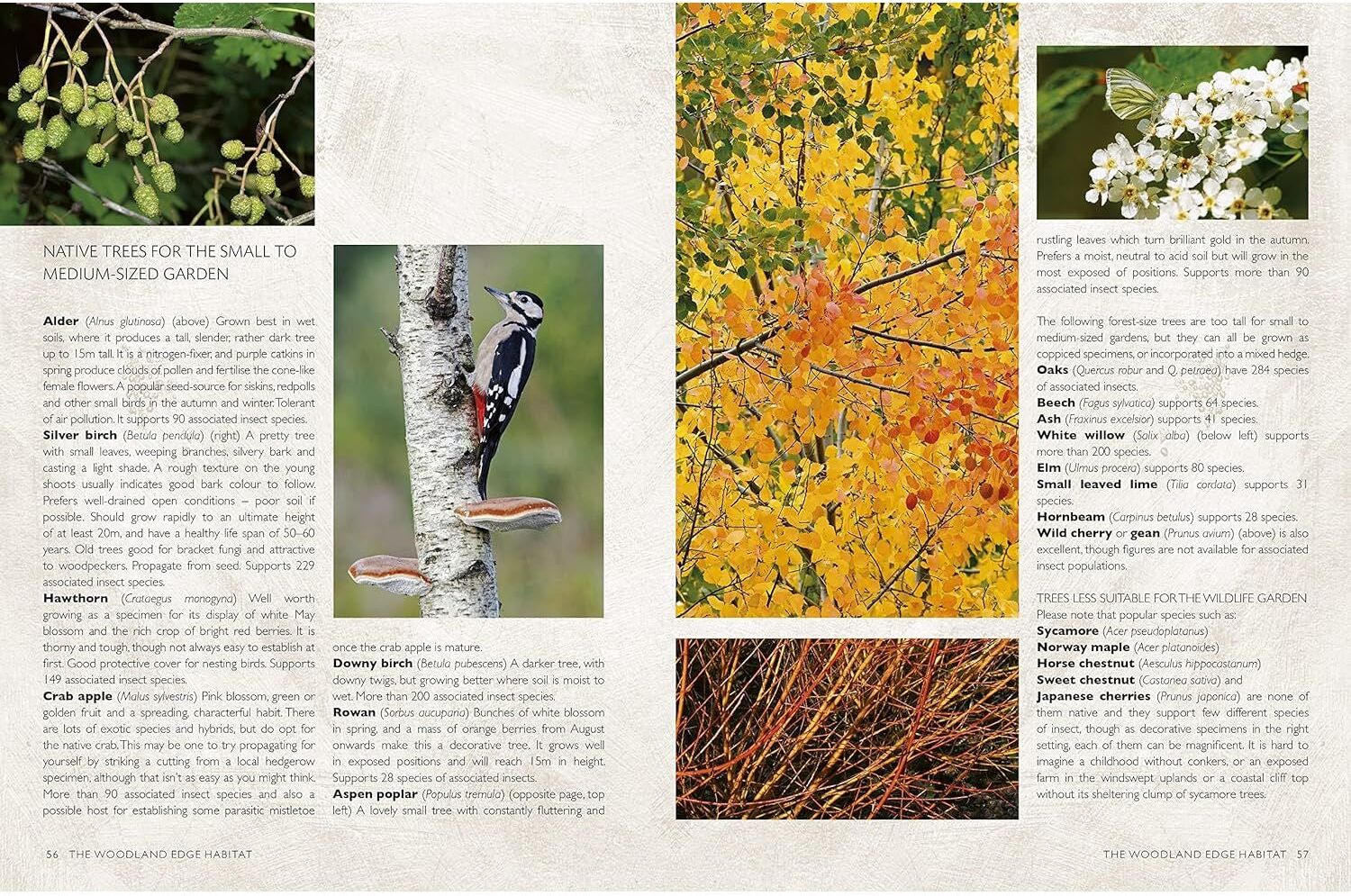
Frances Lincoln New Wild Garden & RHS Wildlife Gardening 2 Books Collection Set – Gardening Guide CollectionNew Wild Garden Natural-style planting and practicalities By Ian Hodgson & RHS Companion To Wildlife Gardening By Chris Baines 2 Books Collection Set: New Wild Garden: Natural-style planting and practicalities: The New Wild Garden combines new approaches to a more naturalistic design with the practical side of growing wildflowers and shows how to incorporate wildflowers, real meadows and a looser prarie-style planting into gardens and wild spaces.With serious concern into the decline of pollinators and habitats, meadows are currently the focus of enormous creativity. Gardeners, wildlife lovers, professional designers and seed manufacturers are all pushing the envelope of what can be grown, the pictorial effects that can be achieved, and the benefits that this provides for gardeners and wildlife. RHS Companion to Wildlife Gardening: This best-selling book was first published as How to Make a Wildlife Garden, and launched at the 1985 Chelsea Flower Show, making wildlife a mainstream issue for gardeners and the public. Now fully revised and updated by the author, this beautiful new freshly illustrated edition highlights the changes in garden wildlife over the past 35 years.Incorporating RHS research, updated best practice and addressing a multitude of controversial conservation issues, this stunning guide is also a celebration of the rich variety of wild plants and animals that can bring a beautiful garden to life.16,49 £*Shipping: 2,99 £Secure redirect to the provider
-
DK RHS Gardening Through the Year & Small Garden Handbook 2 Book Set – Seasonal Gardening & Design GuideRHS Gardening Through the Year By Ian Spence & RHS Small Garden Handbook By Andrew Wilson 2 Books Collection Set: RHS Gardening Through the Year: Find out when the best time is for pruning rose bushes, when your potatoes will be ready to harvest, how to keep your lawn green and well-fed, and learn how to plan ahead with this comprehensive gardening book. Keep on top of garden tasks with month-by-month chapters, "Last Chance" reminders, "Get Ahead" tips, and handy to-do lists. This RHS book will make gardening easier by providing helpful guidelines and realistic advice, so you can plan out your time efficiently and effectively. Packed with beautiful photo galleries that showcase each month's "Star Plant", you'll be inspired to have your own garden blooming throughout the year! Explore more than 350 different varieties in the A-Z illustrated plant directory. RHS Small Garden Handbook: RHS Small Garden Handbook provides an all-in-one guide for small space gardeners and draws on the experience in growing, planting, landscaping and design for which the RHS is world famous. It begins by explaining how to assess your plot so that you are aware of the soil, orientation, microclimate, existing materials and proportions that you have to work with, before revealing the principles of good design. Showing how your decisions on layout, colour and texture will affect the finished design and what tricks can be played to create a greater sense of space - with everything from expert design advice on boundaries, hedges and fences to clever ideas for containers and storage - every gardener will gain confidence in creating a garden to enjoy no matter how big the plot.19,95 £*Shipping: 2,99 £Secure redirect to the provider
-
DK How to Garden When You’re New to Gardening by Royal Horticultural Society – Beginner’s Guide to Gardening BasicsIf the desire to start a garden has been planted in your heart, then this essential guide is a wonderful companion to accompany you on your new adventure!If you're not sure of the first steps to take, this handbook takes the anxiety out of plotting and planting and equips you with all the know-how and confidence you need to get digging into your garden.Creating a garden that you can enjoy and keep looking beautiful all year round is easier than you think!With the expertise of the Royal Horticultural Society, you'll find simple step-by-step instructions, with clear images to help you create your dream garden, no matter the size and scale.Get to know your garden and choose plants that will grow well in particular soil types and conditions year after year. From growing root crop to cutting back ivy, this book gives you lots of simple garden ideas and projects that you can do yourself.Even if you've never sowed a seed or pulled a weed, RHS How to Garden When You're New To Gardening contains everything you need to kickstart your new outdoor hobby! This refreshingly accessible book is perfect for the novice gardener who wants to make the most of whatever garden they have.Your Guide to Creating the Garden of Your DreamsDo you want to create a garden you can show off with pride? Would you like to grow your own food? This book will get you started quickly! By following the simple steps and projects outlined in this book, you will reap instant rewards and long-term successes so that you can enjoy your garden in all seasons.Inside the pages of this comprehensive gardening book, you'll discover:- Clear definitions and descriptions of the different types of plants.- Tips on choosing the type of garden you want.- Easy-to-follow instructions for choosing the right plants for your soil.- Simple step-by-step instructions to producing your first crop.- Practical gardening advice on planting, growing, and caring for different plants.7,99 £*Shipping: 2,99 £Secure redirect to the provider
-
Are dipoles always polar?
No, dipoles are not always polar. A dipole is formed when there is a separation of positive and negative charges within a molecule. If the molecule is symmetrical and the charges are evenly distributed, the dipole moments cancel each other out, resulting in a nonpolar molecule. Only asymmetrical molecules with an uneven distribution of charges will have a net dipole moment, making them polar. **
-
Are all polar bonds dipoles?
Yes, all polar bonds are dipoles. A polar bond is a type of covalent bond where there is an unequal sharing of electrons between two atoms, resulting in a partial positive and partial negative charge on the atoms involved. This charge separation creates a dipole moment, making the bond a dipole. **
-
Do ionic compounds form dipoles?
Ionic compounds do not form dipoles because they consist of ions held together by electrostatic forces of attraction. In an ionic compound, one atom donates electrons to another atom, resulting in the formation of positively and negatively charged ions. These ions are arranged in a crystal lattice structure, with no separation of charges within individual molecules to create dipoles. **
-
What are dipoles in chemistry?
In chemistry, a dipole refers to a molecule that has a separation of positive and negative charges. This occurs when there is an unequal distribution of electrons within the molecule, causing one end to be slightly positive and the other end to be slightly negative. This separation of charges creates a dipole moment, which can result in the molecule having polar characteristics. Dipoles are important in understanding the behavior of molecules in various chemical reactions and interactions. **
Similar search terms for Dipoles
-
Picnic at Ascot Diamond Collection Gardening Tote with ToolsCasual Style defines this durable multi-pocket gardening tote. Set includes three top quality, heavy gauge stainless tools with comfort grip handles. Roomy interior is great for transporting supplies and side pockets have room for a beverage and...59,99 $*Shipping: 0,00 $Secure redirect to the provider
-
Frances Lincoln RHS Companion to Wildlife Gardening by Chris BainesFully revised and updated by the author, this is the perennial and comprehensive guide to the art of wildlife gardening from the RHS, freshly illustrated and bursting with new ideas, ideas and projects. Gardening and wildlife make perfect partners. So many people are discovering that by choosing the right plants for nectar and fruit, providing some shelter and safety, a little extra food and water, and a nest box or two, any garden, balcony or backyard can be dramatically brought to life. This best-selling book was first published as How to Make a Wildlife Garden, and launched at the 1985 Chelsea Flower Show, making wildlife a mainstream issue for gardeners and the public. Now fully revised and updated by the author, this beautiful new freshly illustrated edition highlights the changes in garden wildlife over the past 35 years. Incorporating RHS research, updated best practice and addressing a multitude of controversial conservation issues, this stunning guide is also a celebration of the rich variety of wild plants and animals that can bring a beautiful garden to life. Packed full of practical advice from which plants to choose for bees, birds and butterflies, how to construct the ideal wildlife pond, where to position nesting boxes and how to enjoy wildlife in any size of outdoor space, this authoritative companion shows how wildlife gardening can make a stylish and enjoyable contribution to the environment, inspiring new gardeners while also delighting the very many owners of the best-selling original.9,99 £*Shipping: 2,99 £Secure redirect to the provider
-
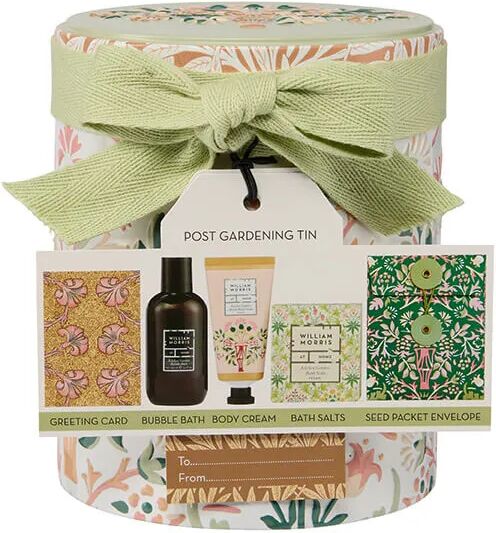
William Morris At Home Kitchen Garden Post-Gardening Care Flowerpot TinCelebrate a love of gardening with the William Morris At Home Kitchen Garden Post‑Gardening Care Flowerpot Tin—a thoughtful, beautifully presented gift designed to bring comfort after time spent tending the garden. Inside the reusable, embossed tin, you’ll find a luxurious trio of bath and body treats, a Morris‑print note card and a charming string‑and‑washer seed envelope, all tied with ribbon for effortless gifting. Unwind with a simple three‑step ritual. Begin with mineral‑rich bath salts infused with sea salt, chicory and aloe to soothe tired muscles. Follow with a soft, foaming bubble bath enriched with vitamin E and aloe. Finish with the Restore Body Cream, blended with vitamin E, cocoa butter, shea butter and macadamia oil to leave skin feeling supple and replenished. The collection is scented with Purple Basil, a bright, aromatic fragrance featuring basil, tarragon and clove—created to evoke freshly gathered herbs and proven to support a sense of wellbeing. The airtight flowerpot tin is designed for long‑term use, ideal for storing tea, coffee or other kitchen essentials. A gift tag allows for easy personalisation, making it a unique present for gardeners and admirers of William Morris alike. Featuring the historic Flowerpot design created by William Morris in 1883, this collection is part of the William Morris At Home collaboration with the not‑for‑profit William Morris Gallery. Each purchase helps support the Gallery’s work in preserving the legacy of this iconic British designer for future generations. Cruelty free and vegan friendly.16,20 £*Shipping: 3,50 £Secure redirect to the provider
-
How can one recognize dipoles?
Dipoles can be recognized by looking at the distribution of charge within a molecule. A molecule with a significant difference in electronegativity between its atoms is likely to have a dipole moment. Additionally, if a molecule has a symmetrical shape, it is less likely to be a dipole, while asymmetrical shapes are more likely to have a dipole moment. Experimentally, dipoles can be identified using techniques such as infrared spectroscopy or measuring the molecule's behavior in an electric field. **
-
Are they dipoles or not?
It depends on the specific molecules in question. If a molecule has a significant difference in electronegativity between its atoms and a non-symmetrical shape, it is likely to be a dipole. However, if a molecule has a symmetrical shape or the electronegativity difference between its atoms is negligible, it is likely to be non-polar and not a dipole. It is important to consider both the shape and the electronegativity of the atoms in a molecule to determine if it is a dipole or not. **
-
Are all angular molecules dipoles?
No, not all angular molecules are dipoles. A molecule is a dipole if it has a separation of positive and negative charges, which occurs when the molecule is asymmetrical. Angular molecules, also known as bent molecules, can be dipoles if they have an uneven distribution of electrons, resulting in a net dipole moment. However, some angular molecules, such as carbon dioxide (CO2), are symmetrical and do not have a net dipole moment. **
-
Is quick help needed with dipoles?
Quick help with dipoles may be needed depending on the complexity of the problem or the level of understanding of the individual seeking help. Dipoles can be challenging to understand for some, so having quick assistance can be beneficial in clarifying concepts or solving problems efficiently. However, with proper resources and guidance, individuals can also learn and work through dipoles at their own pace. **
* All prices are inclusive of VAT and, if applicable, plus shipping costs. The offer information is based on the details provided by the respective shop and is updated through automated processes. Real-time updates do not occur, so deviations can occur in individual cases. ** Note: Parts of this content were created by AI.