Buy branchenbuch.co.at ?
We are moving the project
branchenbuch.co.at .
Are you interested in purchasing the domain
branchenbuch.co.at ?
domain@kv-gmbh.de · 0541-91531010
Buy branchenbuch.co.at ?
When do you use "dont" in French?
"Dont" is used in French to indicate possession or to replace the preposition "de" followed by a noun. It is used when the noun being replaced is the object of the verb in the relative clause. For example, "La fille dont j'ai parlé" (The girl I talked about) or "Le livre dont tu as besoin" (The book you need). **
Is there a difference between dont and duquel?
Yes, there is a difference between "dont" and "duquel" in French. "Dont" is used to indicate possession or relationship and is equivalent to "whose" or "of which" in English. For example, "le livre dont je t'ai parlé" means "the book that I told you about." On the other hand, "duquel" is a relative pronoun that is used to refer to a specific noun with a preposition, such as "le livre duquel je t'ai parlé" meaning "the book about which I told you." So, while both words are used to introduce relative clauses, they are used in different contexts and have different meanings. **

Similar search terms for Dont
Top-Angebote
Products related to Dont:
-
Macmillan The Storyteller's Secret: From Ted Speakers To Business Legends Why Some Ideas Catch On And Others DontHow did a Venice Beach T-shirt vendor become television's most successful producer? How did an entrepreneur who started in a garage create the most iconic product launches in business history? How did a timid pastor's son overcome a paralyzing fear of public speaking to captivate sold-out crowds at Yankee Stadium; twice? How did a human rights attorney earn TED's longest standing ovation; and how did a Facebook executive launch a movement to encourage millions of women to 'lean in'? They told brilliant stories. In The Storyteller's Secret: From TED Speakers to Business Legends; Why Some Ideas Catch on and Others Don't; keynote speaker; bestselling author; and communication expert Carmine Gallo reveals the keys to telling powerful stories that inspire; motivate; educate; build brands; launch movements; and change lives. The New York Times has called a well-told story 'a strategic tool with irresistible power' - the proof lies in the success stories of 50 icons; leaders; and legends featured in The Storyteller's Secret: entrepreneurs like Richard Branson; Sara Blakely; Elon Musk; Steve Jobs; and Sheryl Sandberg; spellbinding speakers like Dr. Martin Luther King; Jr.; Bryan Stevenson; and Malala Yousafzai; and business leaders behind famous brands such as Starbucks; Southwest Airlines; Wynn Resorts; Whole Foods; and Pixar. Whether your goal is to educate; fundraise; inspire teams; build an award-winning culture; or to deliver memorable presentations; a story is your most valuable asset and your competitive advantage. In The Storyteller's Secret; Gallo explains why the brain is hardwired to love stories - especially rags-to-riches stories - and how the latest science can help you craft a persuasive narrative that wins hearts and minds. 'The art of storytelling can be used to drive change;' says billionaire entrepreneur Richard Branson. And since the next decade will see the most change our civilization has ever known; your story will radically transform your business; your life; and the lives of those you touch. Ideas that catch on are wrapped in story. Your story can change the world. Isn't it time you shared yours?4,95 £*Shipping: 1,99 £Secure redirect to the provider
-
Fusion Finds Professional Handheld Mirror Large Salon Mirror For Barbers, Hairdressers & Home Grooming Professional Handheld Mirror Large Salon Mirror For Barbers, Hairdressers & Home GroomingExperience every detail with confidence using a Handheld Mirror designed for professionalquality viewing at home or in the salon. Whether you're checking the back of a fresh haircut, styling your hair, or perfecting your look, this practical mirror...37,97 $*Shipping: 0,00 $Secure redirect to the provider
-
Frances Lincoln New Wild Garden & RHS Wildlife Gardening 2 Books Collection Set – Gardening Guide CollectionNew Wild Garden Natural-style planting and practicalities By Ian Hodgson & RHS Companion To Wildlife Gardening By Chris Baines 2 Books Collection Set: New Wild Garden: Natural-style planting and practicalities: The New Wild Garden combines new approaches to a more naturalistic design with the practical side of growing wildflowers and shows how to incorporate wildflowers, real meadows and a looser prarie-style planting into gardens and wild spaces.With serious concern into the decline of pollinators and habitats, meadows are currently the focus of enormous creativity. Gardeners, wildlife lovers, professional designers and seed manufacturers are all pushing the envelope of what can be grown, the pictorial effects that can be achieved, and the benefits that this provides for gardeners and wildlife. RHS Companion to Wildlife Gardening: This best-selling book was first published as How to Make a Wildlife Garden, and launched at the 1985 Chelsea Flower Show, making wildlife a mainstream issue for gardeners and the public. Now fully revised and updated by the author, this beautiful new freshly illustrated edition highlights the changes in garden wildlife over the past 35 years.Incorporating RHS research, updated best practice and addressing a multitude of controversial conservation issues, this stunning guide is also a celebration of the rich variety of wild plants and animals that can bring a beautiful garden to life.16,49 £*Shipping: 2,99 £Secure redirect to the provider
-
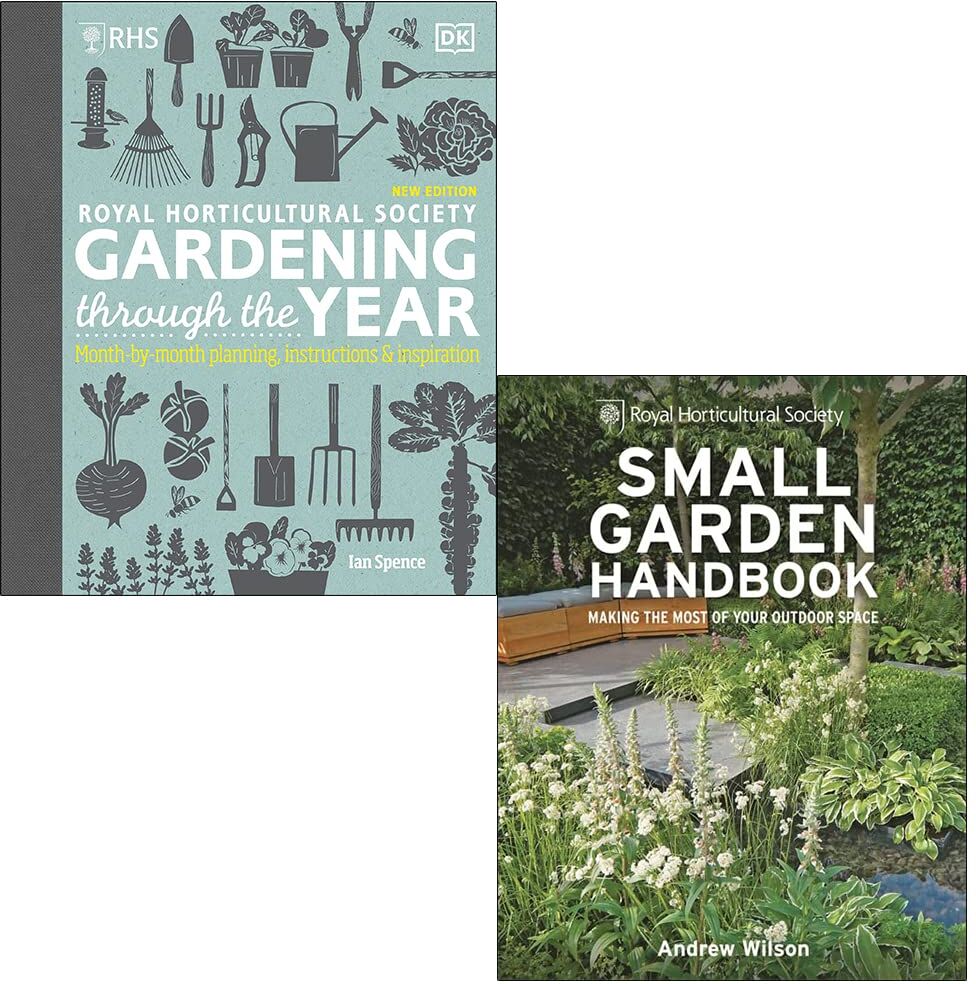
DK RHS Gardening Through the Year & Small Garden Handbook 2 Book Set – Seasonal Gardening & Design GuideRHS Gardening Through the Year By Ian Spence & RHS Small Garden Handbook By Andrew Wilson 2 Books Collection Set: RHS Gardening Through the Year: Find out when the best time is for pruning rose bushes, when your potatoes will be ready to harvest, how to keep your lawn green and well-fed, and learn how to plan ahead with this comprehensive gardening book. Keep on top of garden tasks with month-by-month chapters, "Last Chance" reminders, "Get Ahead" tips, and handy to-do lists. This RHS book will make gardening easier by providing helpful guidelines and realistic advice, so you can plan out your time efficiently and effectively. Packed with beautiful photo galleries that showcase each month's "Star Plant", you'll be inspired to have your own garden blooming throughout the year! Explore more than 350 different varieties in the A-Z illustrated plant directory. RHS Small Garden Handbook: RHS Small Garden Handbook provides an all-in-one guide for small space gardeners and draws on the experience in growing, planting, landscaping and design for which the RHS is world famous. It begins by explaining how to assess your plot so that you are aware of the soil, orientation, microclimate, existing materials and proportions that you have to work with, before revealing the principles of good design. Showing how your decisions on layout, colour and texture will affect the finished design and what tricks can be played to create a greater sense of space - with everything from expert design advice on boundaries, hedges and fences to clever ideas for containers and storage - every gardener will gain confidence in creating a garden to enjoy no matter how big the plot.19,95 £*Shipping: 2,99 £Secure redirect to the provider



-
Which French relative pronouns are there: lequel or dont?
The French relative pronouns "lequel" and "dont" both serve different purposes. "Lequel" is used to refer to a specific noun and has different forms depending on the gender and number of the noun it refers to. On the other hand, "dont" is used to indicate possession or to introduce a relative clause with verbs that require the preposition "de." Both pronouns are important for constructing complex sentences and adding specificity to the language. **
-
Who repairs washing machines, plumbers or electricians?
Electricians typically repair washing machines because they are equipped to handle electrical components and wiring within the machine. Plumbers, on the other hand, specialize in water-related issues such as leaks, clogs, and pipe installations. If a washing machine is experiencing electrical problems, it is best to contact an electrician for repairs. **
-
What is the difference between "dont" and "duquel" in French?
In French, "dont" and "duquel" are both relative pronouns used to introduce a clause that provides additional information about a noun. However, "dont" is used to replace "de + qui/que" and is used when the main verb requires the preposition "de." On the other hand, "duquel" is used to replace "de + lequel/laquelle/lesquels/lesquelles" and is used when the main verb requires the preposition "de" and the noun is masculine singular or plural. In summary, "dont" is used to replace "de + qui/que" and "duquel" is used to replace "de + lequel/laquelle/lesquels/lesquelles." **
-
Which of them (de laquelle, duquel or dont) is grammatically correct?
The correct choice depends on the gender and number of the noun it refers to. "De laquelle" is used for feminine singular nouns, "duquel" is used for masculine singular nouns, and "dont" is used for both masculine and feminine singular or plural nouns. It's important to match the relative pronoun with the noun it refers to in terms of gender and number. **

Can you help me with the French relative pronouns lequel and dont?
Of course! The relative pronoun "lequel" is used to refer to a previously mentioned noun and can be masculine, feminine, singular, or plural. It has different forms depending on the gender and number of the noun it refers to. On the other hand, "dont" is used to replace "de + noun" and is used to indicate possession or relationship. It is used to connect a main clause to a subordinate clause. I can provide more specific examples or help with any other questions you may have about these relative pronouns. **
When do we use ce qui, ce que, qui, que, dont, and lequel?
We use "ce qui" when the subject of the verb is unknown or unspecified. "Ce que" is used when the object of the verb is unknown or unspecified. "Qui" is used as the subject of the verb, while "que" is used as the direct object of the verb. "Dont" is used to indicate possession or relationship, and "lequel" is used to refer to a specific noun that has been previously mentioned. **
Top-Angebote
Products related to Dont:
-
HARPERCOLLINS Lifespan: Why We Age and Why We Dont Have ToLifespan - Why We Age and Why We Dont Have To Description In this paradigm-shifting book from acclaimed Harvard Medical School doctor and one of TIME magazine's 100 most influential people on earth; Dr. David Sinclair reveals that everything we think we know about ageing is wrong; and shares the surprising; scientifically-proven methods that can help readers live younger; longer. For decades; the medical community has looked to a variety of reasons for why we age; and the consensus is that no one dies of old age; they die of age-related diseases. That's because ageing is not a disease - it is inevitable. But what if everything you think you know about ageing is wrong?What if ageing is a disease? And that disease is curable. In LIFESPAN; Dr. David Sinclair; one of the world's foremost authorities on genetics and ageing; argues just that. He has dedicated his life's work to chasing more than a longer lifespan - he wants to enable people to live longer; healthier; and disease-free well into our hundreds. In this book; he reveals a bold new theory of ageing; one that pinpoints a root cause of ageing that lies in an ancient genetic survival circuit. This genetic trick - a circuit designed to halt reproduction in order to repair damage to the genome -has enabled earth's early microcosms to survive and evolve into more advanced organisms. But this same survival circuit is the reason we age: as genetic damage accumulates over our lifespans from UV rays; environmental toxins; and unhealthy diets; our genome is overwhelmed; causing gray hair; wrinkles; achy joints; heart issues; dementia; and; ultimately; death. But genes aren't our destiny; we have more control over them than we've been taught to believe. We can't change our DNA; but we can harness the power of the epigenome to realise the true potential of our genes. Drawing on his cutting-edge findings at the forefront of medical research; Dr. Sinclair will provide a scientifically-proven roadmap to reverse the genetic clock by activating our vitality genes; so we can live younger longer. Readers will discover how a few simple lifestyle changes - like intermittent fasting; avoiding too much animal protein; limiting sugar; avoiding x-rays; exercising with the right intensity; and even trying cold therapy - can activate our vitality genes. Dr. Sinclair ends the book with a look to the near future; exploring what the world might look like - and what will need to change - when we are all living well to 120 or more. Dr. Sinclair takes what we have long accepted as the limits of human potential and mortality and turns them into choices. THE EVOLUTION OF AGEING is destined to be the biggest book on genes; biology; and longevity of this decade.7,95 £*Shipping: 2,99 £Secure redirect to the provider
-
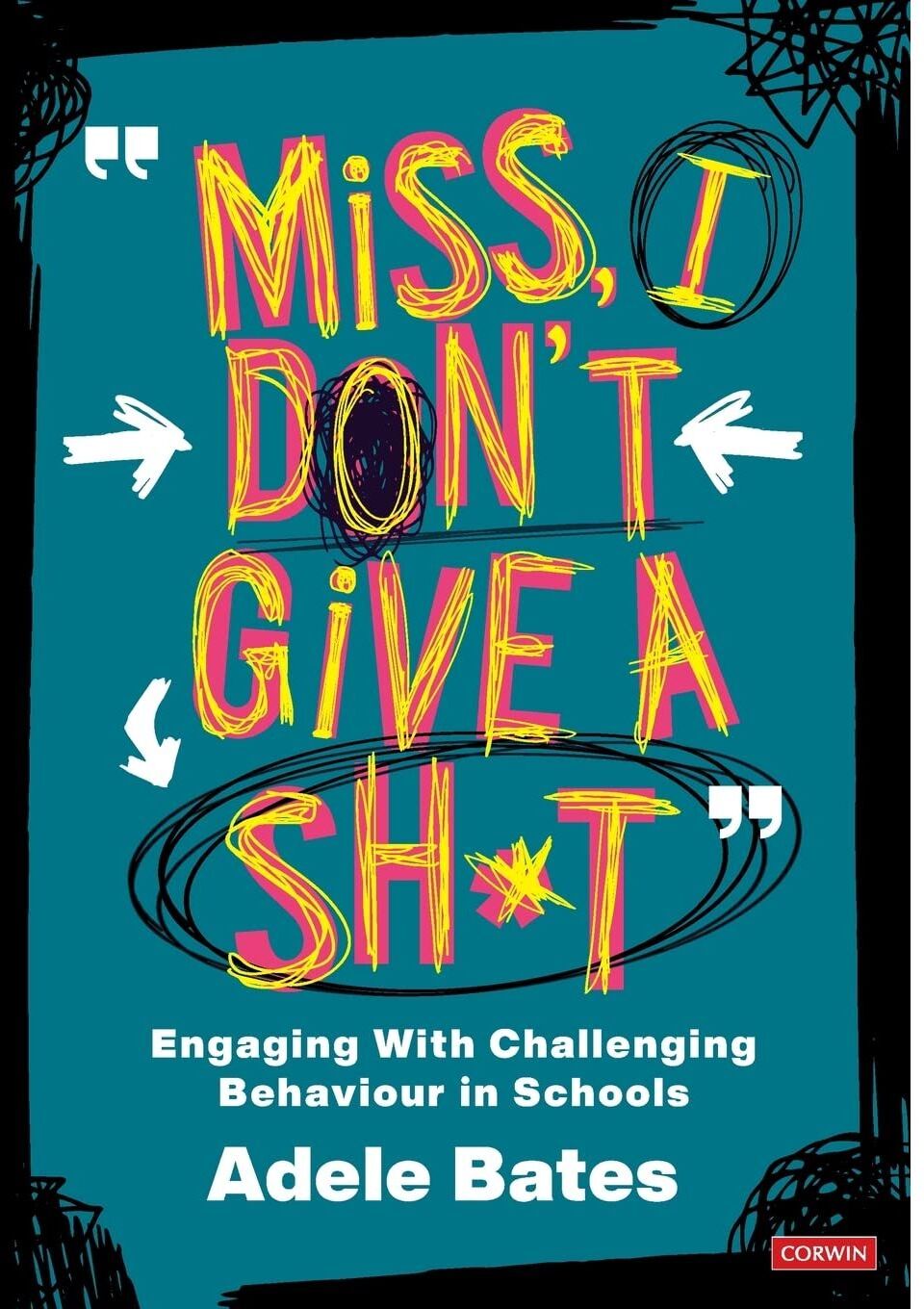
SAGE Publications Miss, I dont give a sh*t : Engaging with challenging behaviour in schoolsDo you want to be an inspiring teacher for everyone you teach, even the trickier cherubs in your class? Or maybe you just want to get through a lesson without a desk flying at you or a blazer being set alight? In this down-to-earth book Adele Bates shares practical approaches, strategies and tips from the classroom on how to help pupils with behavioural needs thrive with their education. Packed full of real-life classroom scenarios, student voice and relevant theory, every chapter offers an Action Box helping you to implement these strategies – next lesson, next week and long term. From relationship building and teaching self-regulation, to fostering inclusivity, paying attention to your own self-care and schoolwide approaches, Adele Bates unpicks some of the most difficult aspects of being a teacher and empowers you to grow as a confident classroom professional.15,69 £*Shipping: 2,99 £Secure redirect to the provider
-
Macmillan The Storyteller's Secret: From Ted Speakers To Business Legends Why Some Ideas Catch On And Others DontHow did a Venice Beach T-shirt vendor become television's most successful producer? How did an entrepreneur who started in a garage create the most iconic product launches in business history? How did a timid pastor's son overcome a paralyzing fear of public speaking to captivate sold-out crowds at Yankee Stadium; twice? How did a human rights attorney earn TED's longest standing ovation; and how did a Facebook executive launch a movement to encourage millions of women to 'lean in'? They told brilliant stories. In The Storyteller's Secret: From TED Speakers to Business Legends; Why Some Ideas Catch on and Others Don't; keynote speaker; bestselling author; and communication expert Carmine Gallo reveals the keys to telling powerful stories that inspire; motivate; educate; build brands; launch movements; and change lives. The New York Times has called a well-told story 'a strategic tool with irresistible power' - the proof lies in the success stories of 50 icons; leaders; and legends featured in The Storyteller's Secret: entrepreneurs like Richard Branson; Sara Blakely; Elon Musk; Steve Jobs; and Sheryl Sandberg; spellbinding speakers like Dr. Martin Luther King; Jr.; Bryan Stevenson; and Malala Yousafzai; and business leaders behind famous brands such as Starbucks; Southwest Airlines; Wynn Resorts; Whole Foods; and Pixar. Whether your goal is to educate; fundraise; inspire teams; build an award-winning culture; or to deliver memorable presentations; a story is your most valuable asset and your competitive advantage. In The Storyteller's Secret; Gallo explains why the brain is hardwired to love stories - especially rags-to-riches stories - and how the latest science can help you craft a persuasive narrative that wins hearts and minds. 'The art of storytelling can be used to drive change;' says billionaire entrepreneur Richard Branson. And since the next decade will see the most change our civilization has ever known; your story will radically transform your business; your life; and the lives of those you touch. Ideas that catch on are wrapped in story. Your story can change the world. Isn't it time you shared yours?4,95 £*Shipping: 1,99 £Secure redirect to the provider
-
Fusion Finds Professional Handheld Mirror Large Salon Mirror For Barbers, Hairdressers & Home Grooming Professional Handheld Mirror Large Salon Mirror For Barbers, Hairdressers & Home GroomingExperience every detail with confidence using a Handheld Mirror designed for professionalquality viewing at home or in the salon. Whether you're checking the back of a fresh haircut, styling your hair, or perfecting your look, this practical mirror...37,97 $*Shipping: 0,00 $Secure redirect to the provider
-
When do you use "dont" in French?
"Dont" is used in French to indicate possession or to replace the preposition "de" followed by a noun. It is used when the noun being replaced is the object of the verb in the relative clause. For example, "La fille dont j'ai parlé" (The girl I talked about) or "Le livre dont tu as besoin" (The book you need). **
-
Is there a difference between dont and duquel?
Yes, there is a difference between "dont" and "duquel" in French. "Dont" is used to indicate possession or relationship and is equivalent to "whose" or "of which" in English. For example, "le livre dont je t'ai parlé" means "the book that I told you about." On the other hand, "duquel" is a relative pronoun that is used to refer to a specific noun with a preposition, such as "le livre duquel je t'ai parlé" meaning "the book about which I told you." So, while both words are used to introduce relative clauses, they are used in different contexts and have different meanings. **
-
Which French relative pronouns are there: lequel or dont?
The French relative pronouns "lequel" and "dont" both serve different purposes. "Lequel" is used to refer to a specific noun and has different forms depending on the gender and number of the noun it refers to. On the other hand, "dont" is used to indicate possession or to introduce a relative clause with verbs that require the preposition "de." Both pronouns are important for constructing complex sentences and adding specificity to the language. **
-
Who repairs washing machines, plumbers or electricians?
Electricians typically repair washing machines because they are equipped to handle electrical components and wiring within the machine. Plumbers, on the other hand, specialize in water-related issues such as leaks, clogs, and pipe installations. If a washing machine is experiencing electrical problems, it is best to contact an electrician for repairs. **
Similar search terms for Dont
-
Frances Lincoln New Wild Garden & RHS Wildlife Gardening 2 Books Collection Set – Gardening Guide CollectionNew Wild Garden Natural-style planting and practicalities By Ian Hodgson & RHS Companion To Wildlife Gardening By Chris Baines 2 Books Collection Set: New Wild Garden: Natural-style planting and practicalities: The New Wild Garden combines new approaches to a more naturalistic design with the practical side of growing wildflowers and shows how to incorporate wildflowers, real meadows and a looser prarie-style planting into gardens and wild spaces.With serious concern into the decline of pollinators and habitats, meadows are currently the focus of enormous creativity. Gardeners, wildlife lovers, professional designers and seed manufacturers are all pushing the envelope of what can be grown, the pictorial effects that can be achieved, and the benefits that this provides for gardeners and wildlife. RHS Companion to Wildlife Gardening: This best-selling book was first published as How to Make a Wildlife Garden, and launched at the 1985 Chelsea Flower Show, making wildlife a mainstream issue for gardeners and the public. Now fully revised and updated by the author, this beautiful new freshly illustrated edition highlights the changes in garden wildlife over the past 35 years.Incorporating RHS research, updated best practice and addressing a multitude of controversial conservation issues, this stunning guide is also a celebration of the rich variety of wild plants and animals that can bring a beautiful garden to life.16,49 £*Shipping: 2,99 £Secure redirect to the provider
-
DK RHS Gardening Through the Year & Small Garden Handbook 2 Book Set – Seasonal Gardening & Design GuideRHS Gardening Through the Year By Ian Spence & RHS Small Garden Handbook By Andrew Wilson 2 Books Collection Set: RHS Gardening Through the Year: Find out when the best time is for pruning rose bushes, when your potatoes will be ready to harvest, how to keep your lawn green and well-fed, and learn how to plan ahead with this comprehensive gardening book. Keep on top of garden tasks with month-by-month chapters, "Last Chance" reminders, "Get Ahead" tips, and handy to-do lists. This RHS book will make gardening easier by providing helpful guidelines and realistic advice, so you can plan out your time efficiently and effectively. Packed with beautiful photo galleries that showcase each month's "Star Plant", you'll be inspired to have your own garden blooming throughout the year! Explore more than 350 different varieties in the A-Z illustrated plant directory. RHS Small Garden Handbook: RHS Small Garden Handbook provides an all-in-one guide for small space gardeners and draws on the experience in growing, planting, landscaping and design for which the RHS is world famous. It begins by explaining how to assess your plot so that you are aware of the soil, orientation, microclimate, existing materials and proportions that you have to work with, before revealing the principles of good design. Showing how your decisions on layout, colour and texture will affect the finished design and what tricks can be played to create a greater sense of space - with everything from expert design advice on boundaries, hedges and fences to clever ideas for containers and storage - every gardener will gain confidence in creating a garden to enjoy no matter how big the plot.19,95 £*Shipping: 2,99 £Secure redirect to the provider
-
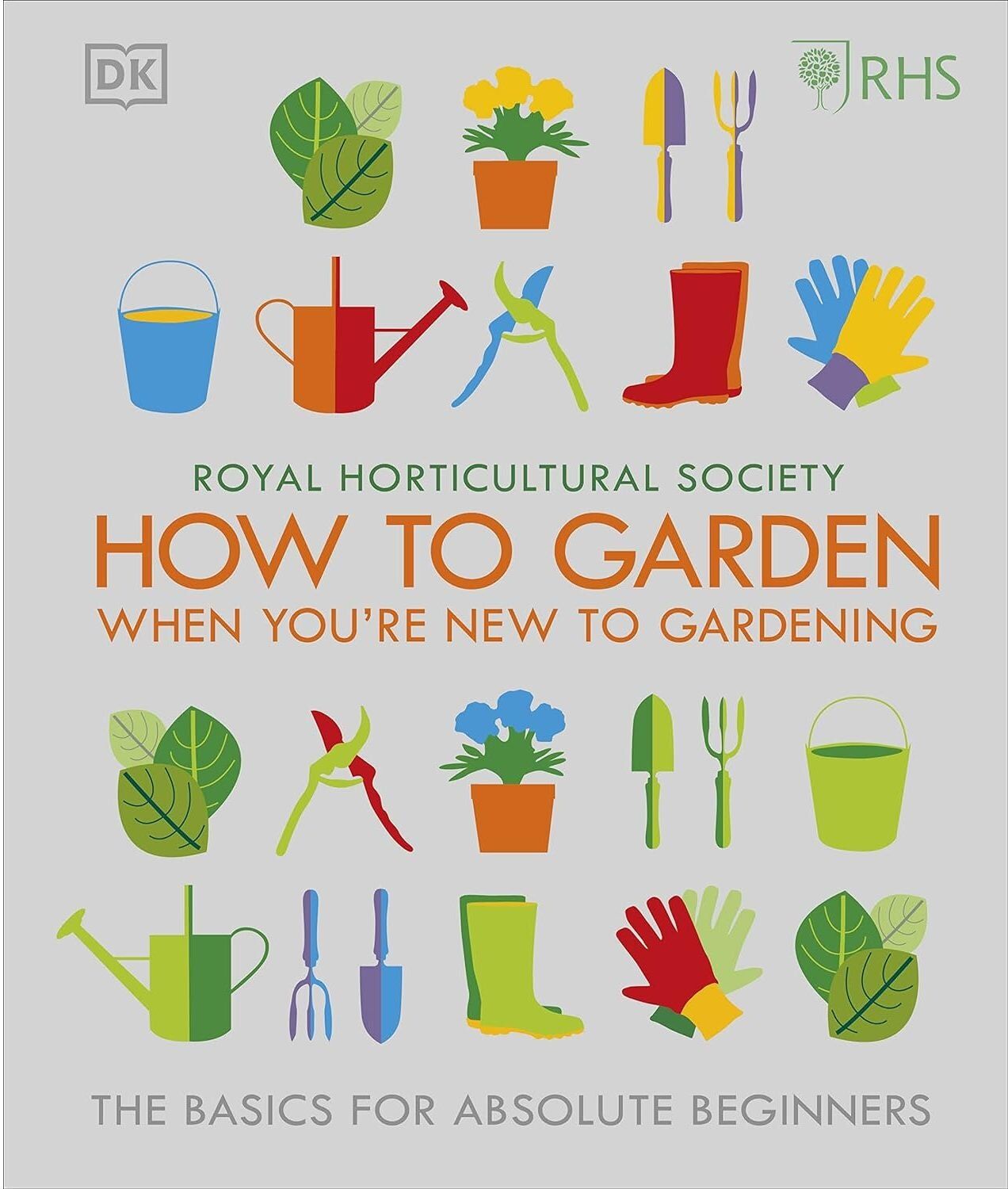
DK How to Garden When You’re New to Gardening by Royal Horticultural Society – Beginner’s Guide to Gardening BasicsIf the desire to start a garden has been planted in your heart, then this essential guide is a wonderful companion to accompany you on your new adventure!If you're not sure of the first steps to take, this handbook takes the anxiety out of plotting and planting and equips you with all the know-how and confidence you need to get digging into your garden.Creating a garden that you can enjoy and keep looking beautiful all year round is easier than you think!With the expertise of the Royal Horticultural Society, you'll find simple step-by-step instructions, with clear images to help you create your dream garden, no matter the size and scale.Get to know your garden and choose plants that will grow well in particular soil types and conditions year after year. From growing root crop to cutting back ivy, this book gives you lots of simple garden ideas and projects that you can do yourself.Even if you've never sowed a seed or pulled a weed, RHS How to Garden When You're New To Gardening contains everything you need to kickstart your new outdoor hobby! This refreshingly accessible book is perfect for the novice gardener who wants to make the most of whatever garden they have.Your Guide to Creating the Garden of Your DreamsDo you want to create a garden you can show off with pride? Would you like to grow your own food? This book will get you started quickly! By following the simple steps and projects outlined in this book, you will reap instant rewards and long-term successes so that you can enjoy your garden in all seasons.Inside the pages of this comprehensive gardening book, you'll discover:- Clear definitions and descriptions of the different types of plants.- Tips on choosing the type of garden you want.- Easy-to-follow instructions for choosing the right plants for your soil.- Simple step-by-step instructions to producing your first crop.- Practical gardening advice on planting, growing, and caring for different plants.7,99 £*Shipping: 2,99 £Secure redirect to the provider
-
Picnic at Ascot Diamond Collection Gardening Tote with ToolsCasual Style defines this durable multi-pocket gardening tote. Set includes three top quality, heavy gauge stainless tools with comfort grip handles. Roomy interior is great for transporting supplies and side pockets have room for a beverage and...59,99 $*Shipping: 0,00 $Secure redirect to the provider
-
What is the difference between "dont" and "duquel" in French?
In French, "dont" and "duquel" are both relative pronouns used to introduce a clause that provides additional information about a noun. However, "dont" is used to replace "de + qui/que" and is used when the main verb requires the preposition "de." On the other hand, "duquel" is used to replace "de + lequel/laquelle/lesquels/lesquelles" and is used when the main verb requires the preposition "de" and the noun is masculine singular or plural. In summary, "dont" is used to replace "de + qui/que" and "duquel" is used to replace "de + lequel/laquelle/lesquels/lesquelles." **
-
Which of them (de laquelle, duquel or dont) is grammatically correct?
The correct choice depends on the gender and number of the noun it refers to. "De laquelle" is used for feminine singular nouns, "duquel" is used for masculine singular nouns, and "dont" is used for both masculine and feminine singular or plural nouns. It's important to match the relative pronoun with the noun it refers to in terms of gender and number. **
-
Can you help me with the French relative pronouns lequel and dont?
Of course! The relative pronoun "lequel" is used to refer to a previously mentioned noun and can be masculine, feminine, singular, or plural. It has different forms depending on the gender and number of the noun it refers to. On the other hand, "dont" is used to replace "de + noun" and is used to indicate possession or relationship. It is used to connect a main clause to a subordinate clause. I can provide more specific examples or help with any other questions you may have about these relative pronouns. **
-
When do we use ce qui, ce que, qui, que, dont, and lequel?
We use "ce qui" when the subject of the verb is unknown or unspecified. "Ce que" is used when the object of the verb is unknown or unspecified. "Qui" is used as the subject of the verb, while "que" is used as the direct object of the verb. "Dont" is used to indicate possession or relationship, and "lequel" is used to refer to a specific noun that has been previously mentioned. **
* All prices are inclusive of VAT and, if applicable, plus shipping costs. The offer information is based on the details provided by the respective shop and is updated through automated processes. Real-time updates do not occur, so deviations can occur in individual cases. ** Note: Parts of this content were created by AI.